
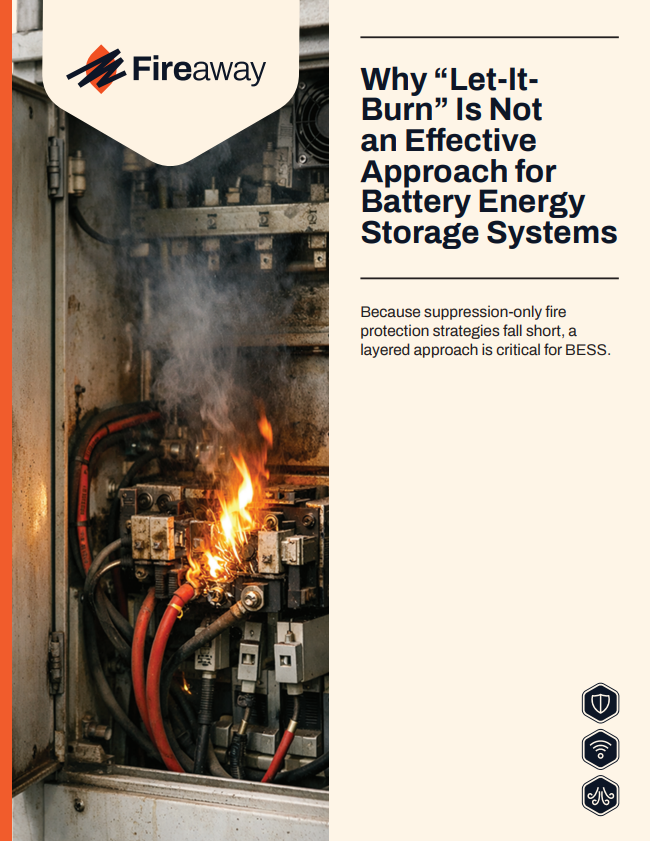
Why "Let-It-Burn" Isn't a Fire Protection Strategy
BROUGHT TO YOU BY:


The fire safety risk of battery energy storage systems (BESS) is real, with numerous documented incidents. South Korea alone experienced more than twenty-three BESS fire incidents beginning in 2017. The United States has also experienced several incidents, including a widely cited 2019 event in Arizona in which firefighters were injured following a deflagration caused by accumulated gases within a BESS enclosure.
The National Fire Protection Association (NFPA) has responded by developing standards addressing BESS operation and fire protection. However, these standards have at times been interpreted in ways that suggest it may be acceptable to allow a BESS fire to burn without suppression—the so-called “let-it-burn” approach.
Adopting a “let-it-burn” policy should be viewed only as a last resort under limited circumstances and should not serve as a primary strategy for protecting BESS installations.
Built around current NFPA guidance and documented industry fire incidents, this practical guide helps engineers, AHJs, developers, EPCs, and asset owners better understand today's BESS fire protection challenges.
Read the guidebook to learn more about:
- NFPA 1 & NFPA 855 guidance
- Why many BESS incidents begin before ignition
- The risks of relying solely on suppression
- A layered prevention, detection, and suppression strategy